
European Institute of Innovation and Technology (EIT)
EIT Health is a consortium of more than 50 core partners and 90 associate partners from leading businesses, research centers and universities from across 14 EU countries. EIT Health was designated as an EIT Knowledge and Innovation Community (KIC) by the EIT Governing Board on 9 December 2014.
The goal of EIT Health is to contribute to increasing the competitiveness of European industry, improve the quality of life of Europe’s citizens and the sustainability of healthcare system. The partnership will promote entrepreneurship and develop innovations in healthy living and active aging, providing Europe with new opportunities and resources. This will be achieved through delivering products, concepts and services, including educational programs that will nurture talents and train the workforce of tomorrow. Adopting an investor approach, EIT Health will drive the integration of business; research and higher education, boost innovation, and be a catalyst for new solutions for Europe. EIT Health will overcome the fragmentation of different healthcare systems in Europe and give companies easier access to markets across the EU. The critical mass of partners from business and industry, education, research, healthcare providers, and insurance companies within EIT Health opens the path to reduced time-to-market for added-value products and services. EIT Health outreach activities are expected to spread all over Europe – establishing new ties to expand innovation and growth.
Contact within the Faculty: Prof. Dr. Dr. h.c. J. Schüttler, Dean of the Faculty of Medicine
European Research Council (ERC)
Starting Grant
Current neural interfaces that assist patients with muscle paralysis generally entail surgical risks and offer poor control of movements. In cases of spinal cord injury, active spinal motor neurons often remain. These can be accessed with minimally invasive measures and exploited to restore neural connections. To this aim, the ERC-funded GRASPAGAIN project will design a bidirectional neural interface that provides feedback to the brain based on real-time stimulation from efferent spinal motor neuron activity. Using deep learning methods and electromyographic sensors, it will develop high-resolution methods to activate and improve the spared output of the spinal cord by identifying action potentials of motor units for hand muscles. This technology aims to enhance voluntary movement in patients, offering greater independence and improved quality of life.
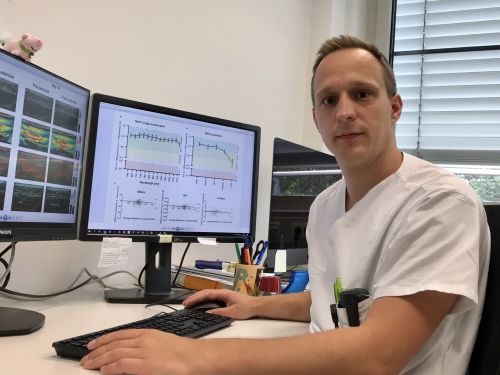
Multispectral optoacoustic tomography (MSOT) is an imaging technique that combines optical and acoustic methods to visualise tissues and structures within the body. It is non-invasive and provides high-resolution images with functional and molecular information. Funded by the European Research Council, the IseeG project aims to develop enhanced contrast agents for imaging early inflammatory processes in the gastrointestinal tract using MSOT. Currently, detection of inflammation is carried out using endoscopic methods that have limited applicability. The idea is to deliver oral dyes that can flag inflamed areas and allow the dynamic visualisation of the intestinal tract in a non-invasive manner.
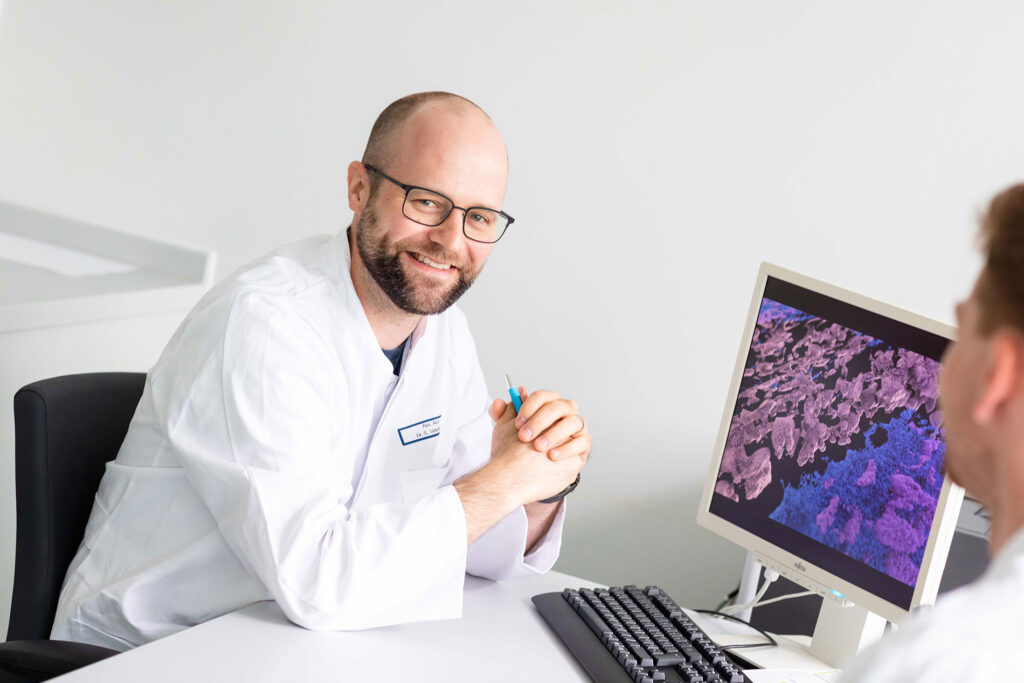
We hypothesize that prevention of inflammation can be accomplished at the level of tissue homeostasis and cooperative stromal biology. The stroma that underlies any given tissue is not a passive scaffold. Instead it comprises a functional network that regulates key aspects of tissue physiology as an adaptive and self-organising system (homeostat). Resident tissue macrophages (RTM) – the tissue’s very own regulators of inflammation – are physically connected to this homeostat and thereby directly integrated into its cooperative signalling grid. Hard-wired communication mechanisms and synergies allow RTM-stroma networks to operate as a functional syncytium, a hitherto unknown operating system that coordinates stress responses and actively prevents the onset of inflammation. In this ERC-funded project, we employ a pioneering tissue biology approach to decipher the stromal homeostat. By combining unique bioimaging with computational 3D reconstruction and multidimensional profiling, we quantitatively unravel complex cell interactions to explain the mechanisms and implications of stromal network communication in a living tissue. Thereby, we aim to elucidate homeostat-operating principles and establish top-down control of inflammatory tissue checkpoints in order to apply them to clinically relevant inflammatory diseases.
Multiple Sclerosis (MS) is an autoimmune inflammatory demyelinating disease of the central nervous system (CNS), which affects young individuals during the most productive phases of their lives. In 85% of the patients, MS initially presents with a relapsing-remitting clinical course (relapsing-remitting MS, RRMS), which in the majority of these individuals is followed by a progressive stage with irreversible accumulation of neurologic deficits (secondary progressive MS, SPMS). A subset of patients develops a primary progressive variant of MS (PPMS), in which chronic accumulation of disability without super-imposed relapses is the most prominent clinical feature. Especially for chronic stages, only limited therapeutic options are available to date.
Moreover, in recent years both incidence and prevalence of MS have increased for yet unknown reasons, strengthening the need for efficacious therapies targeting acute and progressive stages in MS. Indeed, in spite of treatment strategies available already, the majority of MS patients will develop relevant neurological deficits over the course of the disease. As such, recent studies have shown that about 30-50% of MS patients will develop walking impairment over the course of 25 years of MS. Given that the age of onset in MS is between 20 and 30 years of age in most patients, this poses a relevant burden and threat to MS patients and their families, but also society in general. In particular, our understanding of the underlying pathology in progressive stages of MS is still limited, which has also hampered the development of novel therapeutics to causally influence these stages of the disease.
Given the increasing incidence of MS and our limited therapeutic options for progressive MS stages outlined above, developing novel strategies to tackle acute and particularly chronic MS stages in order to prevent disease progression is of utmost importance both for individual patients as well as for society, since available treatments, rehabilitation costs as well as the risk of unemployment pose relevant risks both for patients and society.
From a pathophysiological standpoint, local anti-inflammatory and regenerative mechanisms limit the acute inflammatory processes and define the extent of tissue recovery and consecutive residual neurological deficits both during acute and progressive disease stages, but fail over time causing progressive disease worsening. Astrocytes are CNS resident cells with important roles during both stages of MS. Their actions can either favor chronification or promote resolution of the inflammatory processes. We and others have identified several mechanisms, by which secreted factors from astrocytes promote the ongoing immune response. Even though astrocytes also secrete tissue-regenerative factors such as the leukemia inhibitory factor (LIF) or epidermal growth factor (EGF), the translation of these factors into translationally relevant strategies has been challenging due to an incomplete understanding of their cellular targets and molecular regulation. Thus, the discovery of novel tissue-protective factors and the understanding of their regulation in acute and chronic stages of MS yields the potential to develop novel therapies for chronic inflammatory and degenerative diseases of the CNS.
In this context, we have discovered a novel potential protective factor secreted from astrocytes, the so-called Heparin-binding EGF-like growth factor (HB-EGF). Our preliminary experiments have determined that HB-EGF is efficient in the initial stages to limit autoimmune CNS inflammation, but fails over time due to epigenetic alterations in its promoter region, which limit its availability and function. This process might contribute to disease progression, which makes HB-EGF and its regulation a potential treatment target in MS.
Our overall aim within this project therefore is to (i) examine role and (ii) regulation of HB-EGF in acute and progressive stages of autoimmune CNS inflammation for tissue recovery. In a more translational part of the project, we next aim to determine (iii) the potential therapeutic value of HB-EGF and its epigenetic regulation in acute and chronic autoimmune inflammatory CNS diseases. Finally, we aim to (iv) determine and its relevance as novel biomarker in MS, which might help to stratify patients at risk for disease progression.

In individuals suffering from an autoimmune disease, the immune system is unable to differentiate between self-tissue and foreign threats, thereby inducing an inflammatory defense mechanism. This initially manifests primarily in a single organ, such as the intestine or the skin. Over time, the inflammation frequently spreads from the originally affected organ to other regions of the body, leading to an exacerbation of the disease. Dr. Andreas Ramming and his working group are investigating the molecular mechanisms that trigger the systemic spread of this autoimmune reaction. In recent years, he and his team have collected data and identified initial molecular signatures that apparently promote this detrimental development. The medical researchers now intend to investigate the underlying processes in greater depth to determine which cells are involved.
Consolidator Grant
Evolutionary higher organisms including humans exhibit limited neural regeneration capacity. This indicates that neurons have an inherent longevity. Understanding the underlying mechanisms that enable neurons to retain their function is central to the treatment of neurological diseases. The ERC-funded NEUTIME project focuses on the role of long-lasting nuclear RNAs in epigenetic process regulation. The working hypothesis is that long-retained nuclear RNAs interact with chromatin to preserve epigenetic regulation, a process that declines with ageing. Researchers aim to identify the implicated RNAs and study their maintenance mechanisms as well as their role in age-related neurological disorders.
Bone homeostasis is a complex process that involves constant tissue remodelling by osteoclasts and osteoblasts. Recent evidence underscores a role for osteocytes, the most abundant cell type in the bone. To further delineate how osteocytes influence bone adaptation, the EU-funded ODE project will investigate the process of cell death under physiological conditions and in certain bone diseases. Researchers will characterise osteocyte death and study which damage-associated molecular patterns are released into the bone microenvironment triggering osteoclast differentiation. Results have important implications for the healing of bone fractures as well as for treatments against inflammatory and post-menopausal bone loss.

Synergie Grant
Larger-brained mammals have a folded cerebral cortex, and abnormalities in this folding are linked to cognitive disabilities. This folding is a developmental process related to internal factors, significantly affecting brain structure and function. The ERC-funded UNFOLD project will explore brain cortex development by combining genomics, cell biology, brain mechanics and computational modelling. A team will use in vitro, in vivo and in silico methods along with selected animal models to map the processes underlying cortical folding. The project aims to understand how genetic changes affect tissue mechanics and vice-versa, identify how this mechanisms determine cortical folding, test the universality of findings by inducing folds in smooth-brained species, and assess the effects of cortical folding on neural circuit function and behaviour.
Osteoporosis is associated with weak and brittle bones, but our understanding of the disease remains limited. Therefore, there is an imminent need to properly characterise bone structure, the dynamics of bone remodelling as well as bone vascularisation. Scientists of the EU-funded 4-D nanoSCOPE project will combine state-of-the art image processing software and X-ray microscopy to obtain serial 3D images of bone. It is the first time that this approach has been possible in living animals and will allow scientists to determine bone microstructure as well as the impact of age, hormones, inflammation and treatment.
Proof of Concept
Many chronic inflammatory diseases, such as rheumatoid arthritis and spondyloarthropathies, are currently managed with medications that suppress the immune system. The mainstay of treatment is immunosuppressive therapy. But this comes with downsides, including increased susceptibility to infections and limited long-term relief. With this in mind, the ERC-funded ILCE project explores a new curative treatment approach involving innate lymphoid cells (ILCs), a type of immune cell involved in inflammation. Specifically, it will develop an ILC engager that can precisely target and reprogramme the immune response to resolve inflammation naturally.
Researchers have identified single motor neuron activity in individuals with spinal cord injury and stroke. These remaining motor neurons can be precisely controlled, which allows the extraction of hand movement for up to four degrees of freedom. With this in mind, the ERC-funded PlayAgain project will develop a soft neuroorthosis to aid in small hand movements for children, along with a stretchable, wireless electromyography bracelet. Using pilot data from toddlers with paralysed hands but some residual muscle activity, the project will develop a minimally invasive interface that decodes their motor intentions during play and connects to the neuroorthosis. An integrated exergame will provide real-time neurofeedback to engage movement of the paralysed hand, thereby enhancing motor capabilities by utilising spared motor neuron activity. Ultimately, PlayAgain seeks to advance paediatric neurorehabilitation.